
Will TikTok updates block SnapTik permanently? TikTok regularly releases backend modifications that temporarily disrupt third-party downloaders. Content creators, digital marketers, and social media managers rely heavily on clean, watermark-free video files to repurpose short-form content across multiple platforms.
Understanding whether TikTok updates will block SnapTik helps users navigate temporary service outages smoothly. Web-based extraction engines continuously adapt to changing platform structures to keep video processing functional.
How TikTok Video Downloader Tools Work
Third-party download tools process video links through server-side web requests instead of accessing internal app databases. Understanding this underlying architecture explains why security updates alter tool operations.
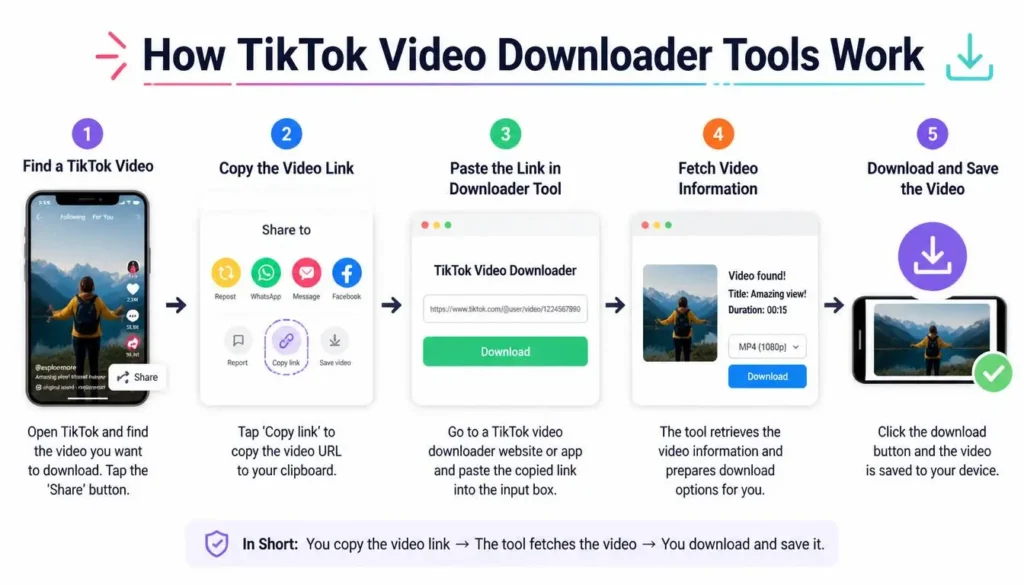
- Downloader servers receive public video links submitted through web input forms.
- Specialized extraction engines parse public web code to identify hosted media files.
- Processing scripts isolate raw video streams from app-level overlay elements.
- High-speed proxy networks deliver direct media files to user web browsers.
Technical Security Systems TikTok Uses to Stop Web Tools
TikTok deploys multi-layered protection frameworks to manage server bandwidth and limit automated content harvesting. These defensive layers create immediate technical hurdles for web-based services.
Security Systems Overview
| Defensive System | Technical Function | Downloader Impact |
| Dynamic API Signing | Generates shifting request headers like X-Gorgon and X-Argus | Breaks standard link parsing logic instantly |
| Advanced CAPTCHA | Detects rapid, non-human browsing actions | Pauses automated server extraction traffic |
| CDN Token Expiration | Generates time-sensitive direct video links | Prevents static media link sharing across pages |
| Behavioral IP Rate Limits | Monitors total media requests coming from unified servers | Temporarily blocks flagged downloader IP addresses |
Can TikTok Permanently Block Tools Like SnapTik?
A complete, permanent shutdown of all third-party web tools remains technically challenging to execute long-term. Public web players require media streams to remain accessible in standard mobile and desktop browsers.
- Standard web browsers require unencrypted media access to stream video content smoothly.
- Development teams patch link-parsing scripts whenever platform protocols change.
- Rotating residential proxy networks bypass IP blocks by mimicking real browser visits.
- Headless browser engines load full render scripts to pass automated verification checks.
Impact of Account Privacy and Creator Settings
Account-level privacy options set absolute boundaries for external extraction tools. Content creator configurations directly determine whether external servers can fetch media files.

- Private accounts restrict public web access, blocking downloader scripts entirely.
- Disabled download permissions within the app alter default video link availability.
- Regional content filters block media requests originating from specific server locations.
- Age-restricted posts require authenticated user sessions, preventing guest-level downloads.
Future Outlook for Web-Based Video Downloaders
The technical tug-of-war between social video platforms and external download utilities will continue indefinitely. Engineering teams continuously update server infrastructures to ensure long-term stability across web tools.
- Backend system changes trigger brief temporary service pauses rather than permanent shutdowns.
- Developer communities release updated parsing parameters quickly when system protocols shift.
- Advanced web rendering tools maintain reliable video extraction capabilities.
- Strong global demand for clean video archiving drives continuous platform maintenance efforts.